


SERVICE SUPPORT
AFTER SERVICE
After-sales
service


Quick response to quality issues
For quality issues arising after product delivery, we provide rapid on-site verification and proper resolution to ensure customer usage.


Standardized process with full-process control
Implement standardized after-sales approval and ledger management, supervise quality, labor hours, and costs throughout the process, ensuring transparent and traceable service.


Continuous improvement ensures quality
Establish a mechanism for after-sales cost analysis and responsibility traceability, continuously improving product quality and after-sales service stability.


Standardized after-sales handling
Strictly follow after-sales management standards when handling issues, ensuring that the service is compliant, efficient, and reliable.
FAQ
General questions
-
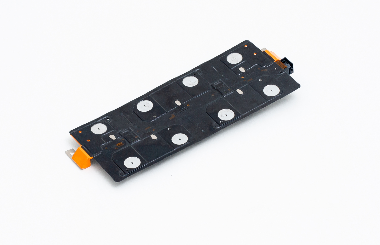
Q1. What specifications are supported by Zhejiang Guanhua Electric's CCS components?CCS components can be classified based on the sampling connection system and manufacturing process into wiring harness CCS, bonding CCS, FPC with nickel pad CCS, press-fit connection CCS, and hot-pressed CCS. Among these, the hot-pressed CCS uses PET hot-press film to integrate components such as FPC, aluminum busbars, and injection-molded parts through a hot-pressing process.
-
Q2. Why not directly use copper busbars in energy storage CCS busbars, but choose aluminum bars instead?In energy storage CCS busbars, aluminum bars are typically used as important components for current collection and transmission. As current collector strips, they can efficiently collect and transmit current, while possessing electrical conductivity, stability, and reliability to support normal battery operation and improve overall performance.
-
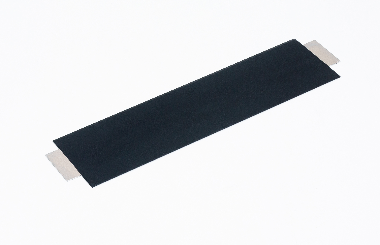
Q3. Why does the module side plate adopt a composite structure of metal material + insulating film instead of a single material?The composite structure of metal material + insulating film is adopted to simultaneously meet the comprehensive requirements of structural strength, electrical safety, cost, and manufacturability. It provides fixing, protection, flame retardancy, and insulation functions.
SUCCESS CASES
Case studies
 1 (3).20260410112947.jpg)
 1.20260410112558.jpg)